
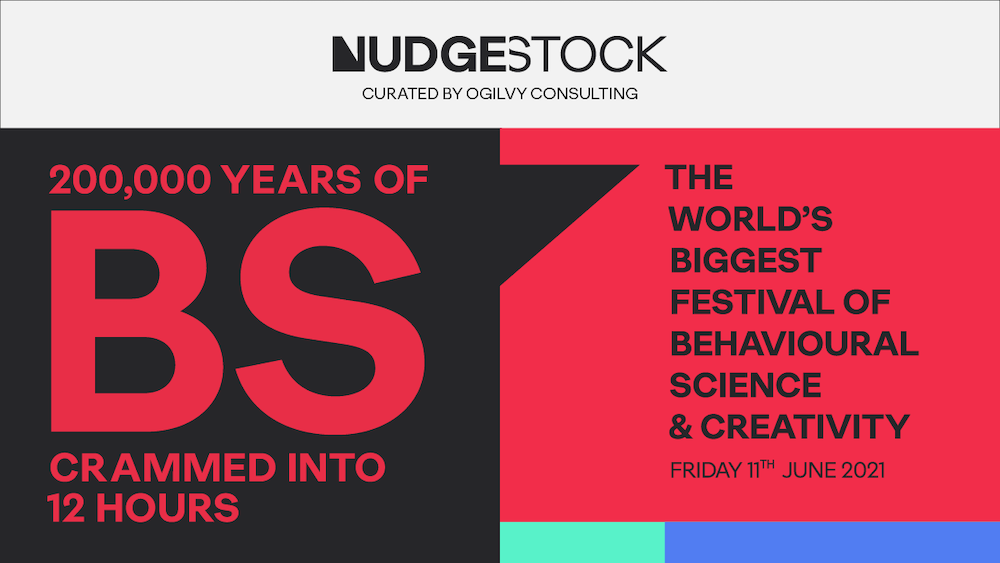
Overview of Nudgestock 2021
On June 11, Nudgestock once again brought together the brightest minds in behavioral science and marketing, blending psychology and creativity to explore how small changes can make a big impact. This year’s theme was particularly compelling: creativity informed by science—a perfect balance of the rational and the emotional.
Hosted virtually by Ogilvy, the festival challenged traditional marketing approaches and explored how behavioral insights can fuel innovative campaigns.
Key Insights and My Perspective
- Behavioral Science as the New Creative Brief
- Rory Sutherland (Vice Chairman, Ogilvy): Sutherland’s keynote framed behavioral science as a toolkit for creativity, emphasizing that great campaigns don’t just look good—they work because they tap into human instincts.
- Reflection: Sutherland’s approach reinforces the power of combining data with human insight. Creativity that’s informed by behavioral science delivers relevance, resonance, and results.
- The Power of Uncertainty
- Professor Tali Sharot (UCL): Sharot explored how uncertainty can drive engagement, explaining why people are more likely to pay attention when outcomes are unpredictable.
- Takeaway: Uncertainty can be a powerful marketing tool when used ethically—whether it’s through dynamic pricing or surprise-and-delight campaigns.
- Choice Architecture in the Digital Age
- Cass Sunstein (Behavioral Economist): Sunstein revisited choice architecture, showing how even subtle changes in digital design—like button placement or default settings—can influence user behavior.
- My Thoughts: For marketers, the digital space offers endless opportunities to apply these principles. Small adjustments can lead to significant results, especially in conversion rates.
Interesting Exhibitors
- Ogilvy’s Behavioral Design Toolkit
- Ogilvy introduced a practical toolkit for integrating behavioral science into campaign design, featuring case studies and step-by-step guides.
- Nudge in Sustainability
- A session highlighted how brands like IKEA use nudges to encourage sustainable behavior, such as designing reusable packaging.
- Gamification in Behavioral Science
- An interactive exhibit showcased how gamification can drive behavior, with examples ranging from fitness apps to customer loyalty programs.
Themes and Analysis
- Creativity Meets Science
- Nudgestock 2021 proved that creativity is no longer just about inspiration—it’s about using insights from behavioral science to make campaigns more effective.
- Ethical Engagement
- The event emphasized the importance of using behavioral techniques responsibly. Nudges should guide, not manipulate.
- The Role of Surprise in Marketing
- Unpredictability can create memorable experiences, but marketers must ensure it aligns with the brand story and doesn’t feel gimmicky.
Rumors from the Hallways
As always, Nudgestock sparked speculation about the future of behavioral science in marketing:
- Ogilvy Developing AI-Powered Nudges
- Whispers suggested Ogilvy was exploring AI tools to deliver real-time nudges in digital campaigns—a potential game-changer for personalization.
- New Research on Nudges and Sustainability
- Attendees buzzed about upcoming studies exploring how nudges can drive widespread adoption of eco-friendly behaviors.
- Expansion into Virtual Reality
- Rumors hinted at behavioral science being integrated into VR environments, allowing brands to create even more immersive, impactful experiences.
Why This Matters for Marketers
Nudgestock 2021 reinforced the idea that creativity and science aren’t opposing forces—they’re complementary. By applying behavioral insights to creative campaigns, marketers can craft strategies that not only capture attention but also drive action.
This aligns with something I’ve been working on for a while, the Behavioural Brand Blueprint, particularly its focus on understanding human behavior and using it to foster authentic connections. details on that to come shortly.
Takeaway Quote
“Great creativity starts where behavioral science ends.”