
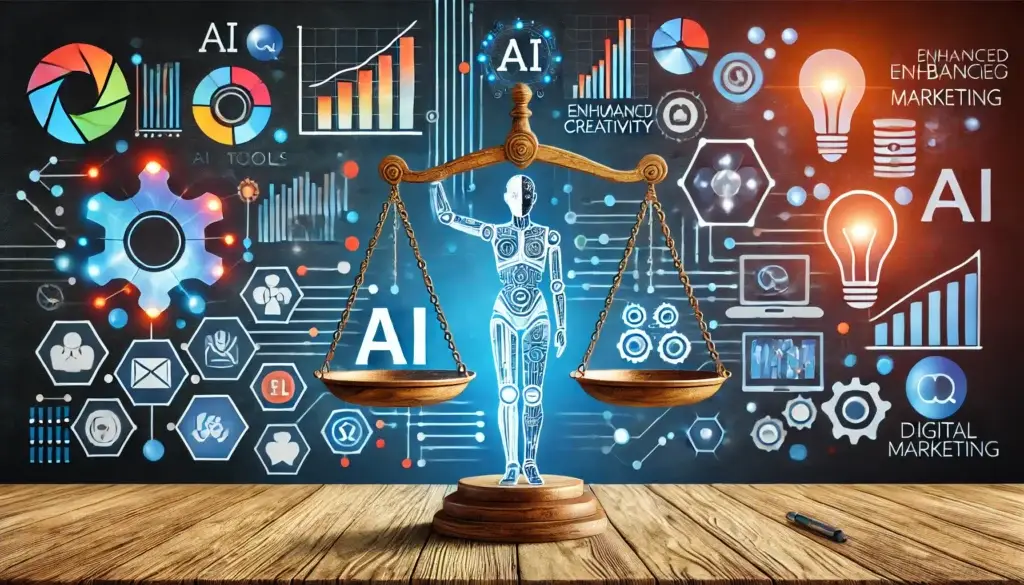
Artificial intelligence has swept into marketing like a magician at a corporate retreat—entertaining, surprising, and occasionally pulling the rug out from under us. Tools like ChatGPT promise to transform how we create, optimize, and connect with audiences. But as with any trick, the real question isn’t how it’s done—it’s why it matters.
Marketers are now caught in a balancing act: embrace AI’s efficiency without losing the messy, emotional, and utterly human creativity that makes marketing resonate.
The Allure of AI: A Double-Edged Sword
AI is brilliant at making predictions. It knows what you want before you do, whether it’s the perfect playlist or a convincing email subject line. But here’s the catch: the more we rely on AI to smooth out the wrinkles in our campaigns, the more we risk losing the texture that makes them memorable.
Take personalization, for instance. AI might know you love coffee, but it doesn’t know why. Is it the ritual of brewing? The aroma? The stolen moments of peace in a busy day? That’s where human creativity steps in—to add the nuance AI can’t see.
Why Human Creativity Still Matters
AI can write a script, but it can’t create an inside joke. It can optimize an ad, but it can’t make you cry. Marketing isn’t just about delivering the right message at the right time—it’s about making people feel something.
Rory Sutherland puts it best: “AI can tell you what works. It can’t tell you what’s wonderful.”
The Danger of Automation Overload
There’s a seductive idea in marketing that more efficiency equals more effectiveness. But if that were true, why do handmade products, handwritten notes, and artisanal experiences still command such loyalty?
Over-reliance on AI risks turning marketing into a numbers game, where the goal is optimization rather than inspiration. The brands that thrive will be those that use AI not as a replacement for creativity, but as a stagehand—moving the scenery while the human actors perform the magic.
The Path Forward: Finding the Balance
The solution isn’t to reject AI—it’s to embrace it as a collaborator. Think of AI as the sous chef in a Michelin-star kitchen: it preps the ingredients and suggests combinations, but the chef creates the dish.
- Focus on Emotional Resonance:
- AI helps identify patterns, but humans create the stories that resonate.
- Experiment with Analog Appeal:
- As AI dominates digital, there may be a resurgence of analog marketing—physical, tactile, and delightfully human.
- Stay Curious:
- Use AI not just to confirm what you know, but to challenge your assumptions.
The Road Ahead
In the end, marketing isn’t a science or an art—it’s an experiment. AI gives us the tools to run smarter experiments, but it’s human creativity that decides which ones are worth running.
As marketers, we must ask: Are we using AI to make campaigns better, or just easier? The answer will define the next chapter of marketing innovation.
“AI doesn’t make marketing less human. It makes being human in marketing more important than ever.”

